
NSR-CHIP
Nano-Scale Research Center for Heterogeneous Integration Platforms
Challenge
CMOS-based Silicon-based microelectronics technology is facing an unprecedented energy challenge as artificial Intelligence technologies are predicted to have enormous requirements trending toward reaching global energy limits. As we look beyond Moore’s Law and face challenges related to scaling, we are reaching the limits of what can be achieved at the atomic level of transistors. This situation presents both a necessity and an opportunity to rethink the materials used in microelectronics and to innovate the design process.
News & Highlights
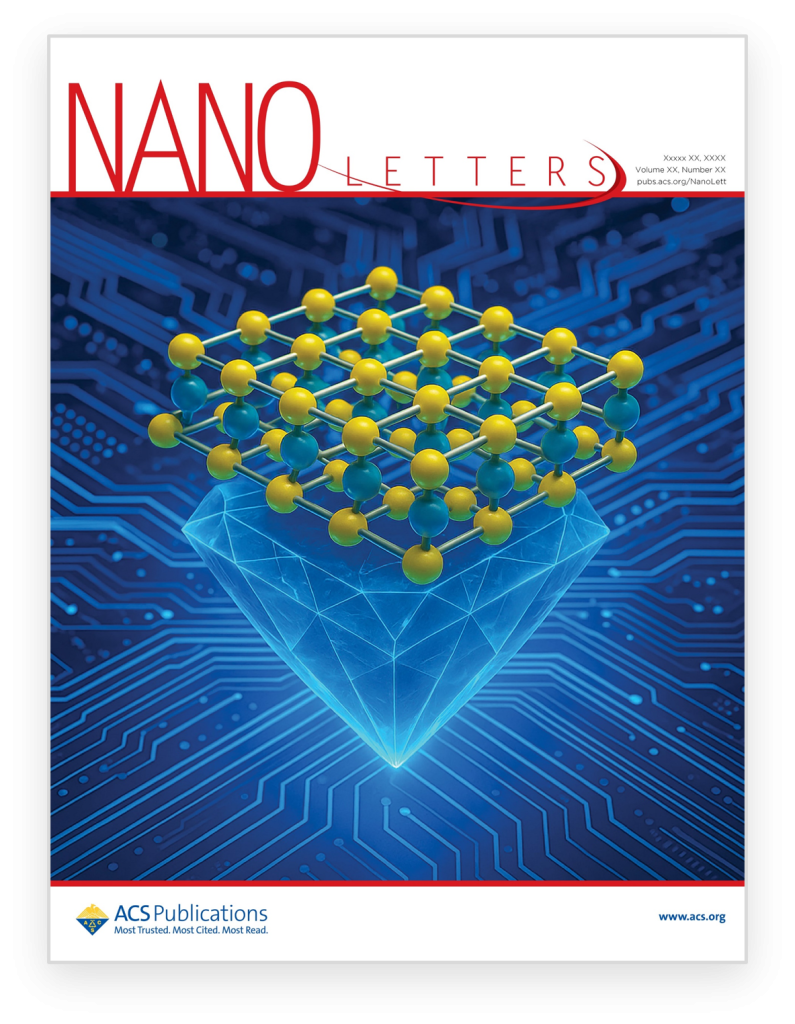
Heterogeneous integration of boron-doped p-diamond with monolayer n-MoS₂ for PN junctions operating at room temperature.
Nano Letters

About NSR-CHIP
NSR-CHIP is spearheaded by Sandia National Laboratories and receives funding from the Department of Energy (DOE)’s Office of Science. As a project under the Office of Science, NSR-CHIP is uniquely positioned to capitalize on the investments made in DOE national labs, user facilities, and research centers, creating exceptional collaboration opportunities.
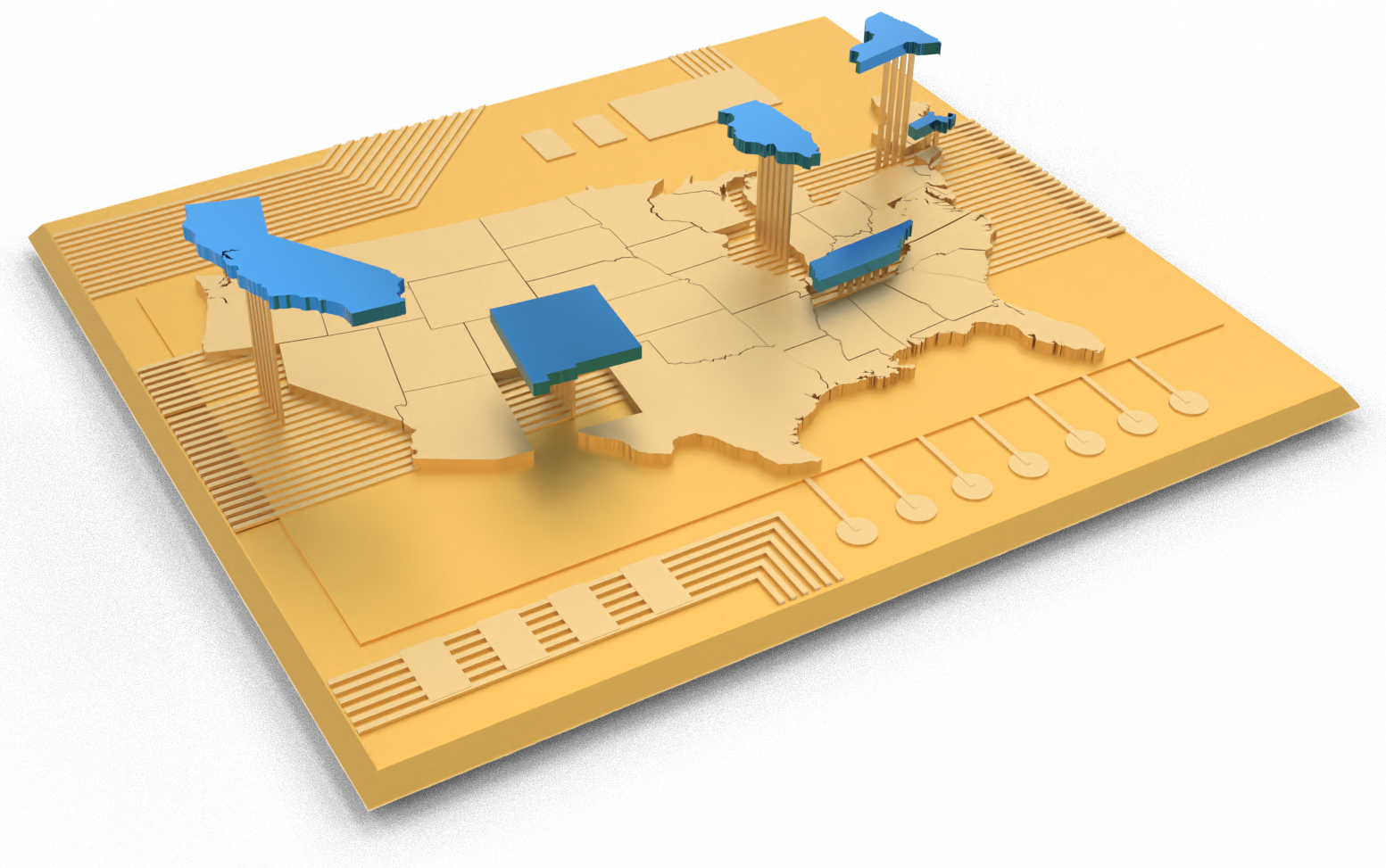
Our Vision
Scientific Hypothesis
Understanding the interconnected fundamental interfacial properties (electronic, lattice, and thermal) of dissimilar 2D and 3D materials stacks within M3D HI structures will enable facile tunability of the properties (electronic, optoelectronic) of the constituent materials beyond traditional means of disparately engineering individual materials.

Research Operational Hypothesis
Closely coordinated, concerted collaboration and integration of the state-of-the-art resources of all the DOE NSRCs can develop and provide new capabilities tailored to the synthesis, integration, multimodal operando characterization, and machine-learning-based co-design frameworks towards system-level performance and efficiency enhancement, indispensable for realizing and accelerating the adoption of M3D HI.

Technical Thrust Areas
More About Synthesis
Goal: Establish the science foundation of advanced epitaxy methods and M3D HI stacking with controlled atomic defects, materials functions, and interface properties.
Expected Outcome: Complex heterogenous material structures, arrays, and interfaces.
More About Physics Probing
Goal: Uncover the unique functional properties (electronic, transport, optical etc.) of M3D HI stacks of dissimilar materials systems (e.g., 2D on 3D materials) and the influences of atomic interfaces.
Expected Outcome: Interfacial properties, defect effects, and device behaviors.

More About Use Cases & ML Models
Goal: Utilize M3D HI in a system to demonstrate particle detection and employ a physics-informed machine learning framework to predictively connect multi-modal metrology and characterization data to system-level performance and energy efficiency.
Expected Outcome: Predictability between material properties and heterostructure behavior.
More About Tools
Goal: Develop a state-of-the-art multimodal M3D HI characterization framework for nondestructive operando metrology for buried materials and associated interfaces.
To learn more, please contact…

Jeffrey S. Nelson
Director, Center for Integrated Nanotechnologies (CINT)
NSR-CHIP Director
jsnelso@sandia.gov
office: (505) 284-1715
mobile: (505) 506-9485

Christian Mailhiot
Senior Manager of Materials Research, Sandia National Laboratories
NSR-CHIP Associate Director
cmailhi@sandia.gov
office: (925) 294-2622
mobile: (925) 290-9606

Anna Wakeland
Technical Business Development Specialist, Sandia National Laboratories
NSR-CHIP Project Manager
akwakel@sandia.gov
mobile: (505) 218-0150